Chemical earthing is designed for long-term low-resistance grounding, but it can fail or perform poorly if it is improperly designed, installed, or maintained.
Common Reasons Why Chemical Earthing Fails
1. Poor Quality Electrode
Low-grade GI or copper-bonded electrode used.
Thin copper coating gets damaged and corrodes quickly.
Non-standard material not compliant with IS 3043.
Result: Increased earth resistance and shorter life.
2. Inferior Earthing Compound
Use of ordinary salt, charcoal, or low-quality backfill material.
Compound loses conductivity over time.
Moisture retention becomes poor.
Result: Earth resistance increases significantly.
3. Improper Installation Depth
Electrode not installed deep enough.
Does not reach moisture-retaining soil layers.
Result: Resistance fluctuates during summer and dry seasons.
4. Dry Soil Conditions
Extremely dry, rocky, sandy, or desert soil.
Lack of natural moisture around the electrode.
Result: Higher earth resistance.
5. Corrosion of Electrode
Continuous exposure to aggressive soil chemicals.
Industrial pollution or acidic soil conditions.
Poor-quality GI coating.
Result: Electrode diameter reduces and conductivity drops.
6. Loose Cable Connections
Improper tightening of clamps and terminals.
Rusted nuts, bolts, or connectors.
Result: High contact resistance despite a good electrode.
7. Lightning or Fault Current Damage
Repeated high fault currents or lightning strikes.
Electrode and connections may deteriorate over time.
Result: Reduced earthing effectiveness.
8. Water Logging
Earthing pit remains submerged for long periods.
Continuous water exposure may accelerate corrosion.
Result: Electrode life decreases.
9. Mechanical Damage
Excavation work near the earthing pit.
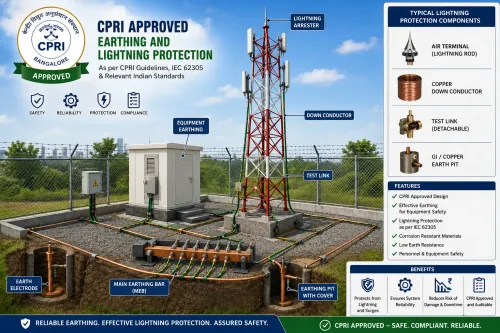
Damage to earthing conductor or test link.
Result: Open circuit or high resistance.
10. Lack of Periodic Testing
Earthing resistance not checked annually.
Problems remain unnoticed.
Result: Earthing system fails when protection is needed most.
How to Prevent Chemical Earthing Failure
✅ Use IS 3043 compliant electrodes.
✅ Use high-conductivity earthing compound.
✅ Install at proper depth (typically 3 meters).
✅ Use corrosion-resistant clamps and conductors.
✅ Perform annual earth resistance testing.
✅ Inspect connections regularly.
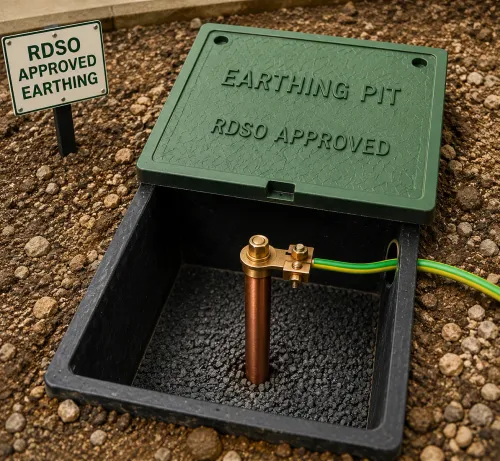
✅ Maintain proper pit chamber and cover.
✅ Use copper bonded or pure copper electrodes for critical applications.
Typical Life Expectancy
Earthing Type
Expected Life
Good Quality Chemical Earthing
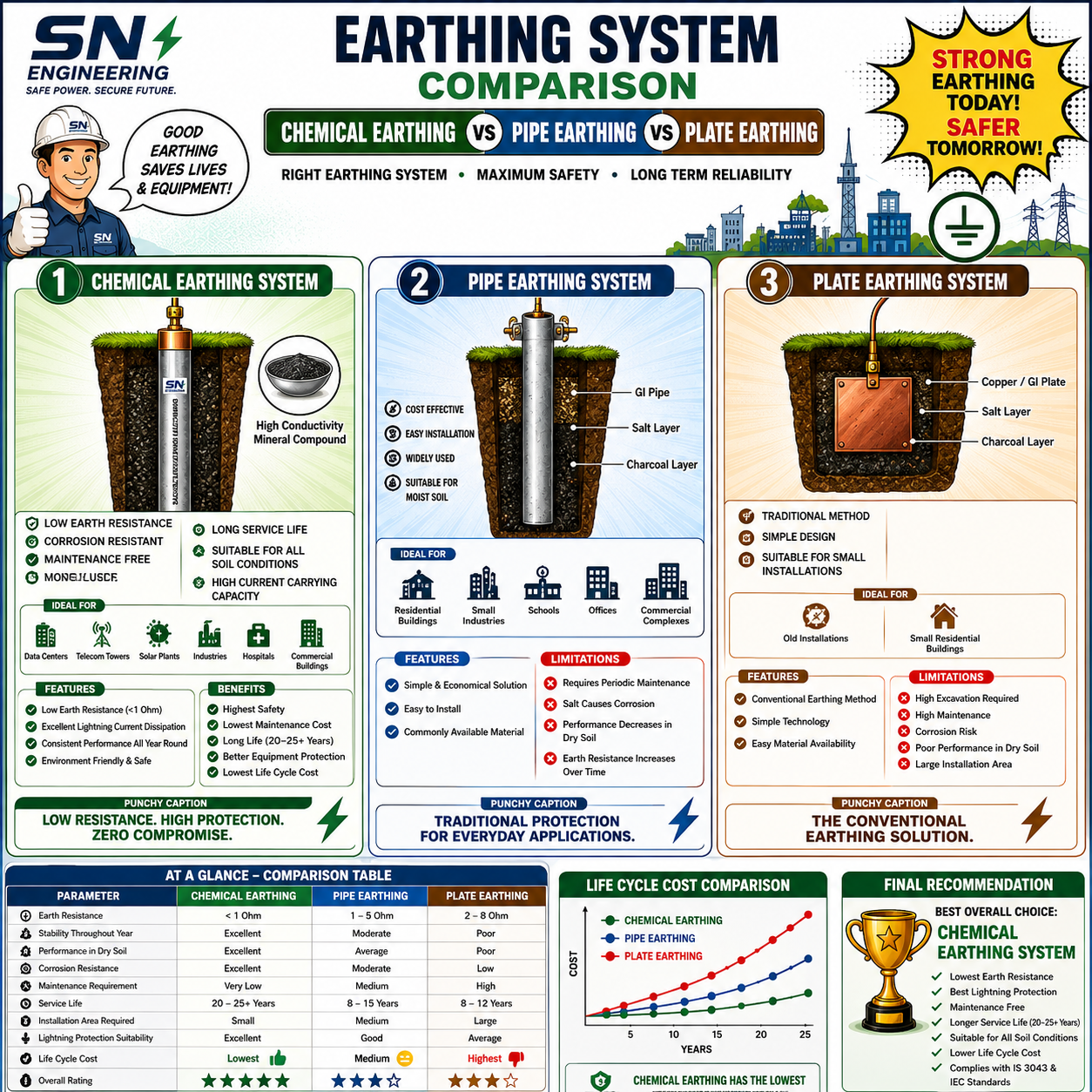
20–25+ Years
Poor Quality Chemical Earthing
3–8 Years
Pipe Earthing
8–15 Years
Plate Earthing
8–12 Years
Most chemical earthing failures are not because of the technology itself, but due to poor materials, incorrect installation, or lack of maintenance/testing.