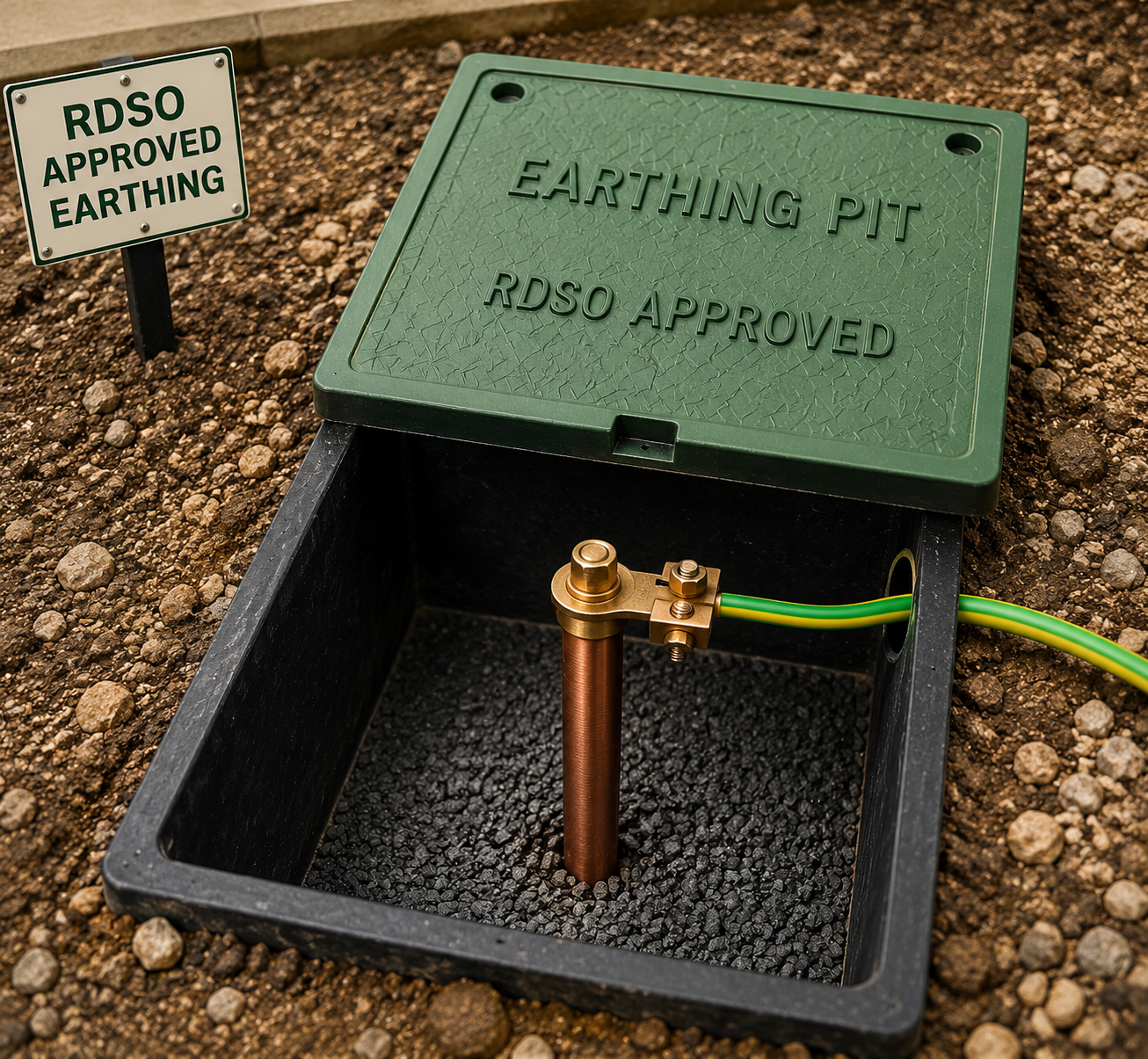
Railway electrical infrastructure operates in demanding environments where dependable grounding is essential. RDSO Approved Earthing is therefore an important consideration for projects where Railway specifications, drawings, or approved product requirements apply.
RDSO—the Research Designs and Standards Organisation—develops and maintains technical standards and specifications for various railway applications. However, procurement teams should always verify the specific approval, product category, specification, and current project requirement instead of treating the term “RDSO approved” as a universal designation.
Why Railway Earthing Requirements Are Different
Railway infrastructure can involve signalling equipment, telecommunications, traction-related installations, stations, electrical panels, equipment rooms, and sensitive electronic systems.
Earthing may be required to support:
- Personnel safety
- Fault-current dissipation
- Equipment protection
- Stable electrical reference
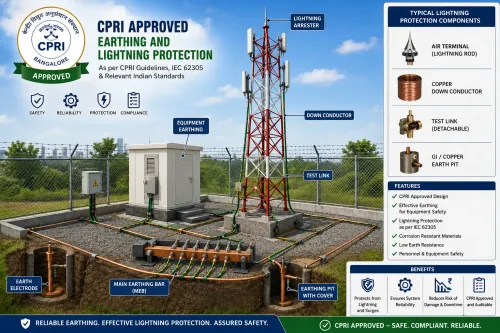
- Lightning protection
- Surge management
- Reliable operation of sensitive systems
Because railway systems can contain interconnected electrical and electronic equipment, grounding arrangements must be selected carefully.
Understanding the Role of Approved Components
When an RDSO specification requires a particular earthing product or system, project teams should confirm that the supplied material corresponds with the relevant approved specification.
Important procurement checks include:
- Product description and model
- Electrode material
- Dimensions and construction
- Applicable RDSO specification
- Approval or test documentation
- Installation recommendations
- Supporting technical data
SN ENGINEERING works in the manufacturing segment for earthing and electrical protection products. For railway-related procurement, documentation and specification matching should remain central to supplier evaluation.
Considerations for Gurugram-Based Procurement Teams
Gurugram is a major engineering, infrastructure, contracting, and corporate procurement hub in Haryana. EPC contractors and project procurement teams operating from the region may source electrical protection materials for projects located across India.
This makes documentation control particularly important. A procurement team should ensure that the material delivered to the project site is consistent with the approved technical submission.
Installation Conditions Still Influence Performance
Approval of a component does not eliminate the need for correct installation. Ground characteristics can vary substantially between project sites.
Soil resistivity, moisture, electrode depth, spacing, conductor sizing, connection quality, and surrounding conditions can influence grounding performance. Testing after installation helps determine whether the completed system meets the required project values.
A Better Procurement Approach
Instead of selecting an earthing product only by price or catalogue description, railway and infrastructure buyers should use a structured evaluation process.
Start with the applicable specification, identify the required product characteristics, review approval documents, verify manufacturing details, and ensure that installation requirements are understood before dispatch.
For RDSO-related applications, traceable documentation and specification compliance are essential parts of responsible procurement. This approach helps contractors and engineering teams reduce technical mismatches and maintain better control over railway electrical safety requirements.