Chemical earthing is an advanced grounding system used to safely dissipate electrical fault current, lightning current, and surge voltage into the earth with very low resistance. It is widely used in industries, telecom towers, solar plants, data centers, substations, hospitals, commercial buildings, and electrical infrastructure where stable and long-lasting earthing is required.
Unlike traditional earthing, chemical earthing uses a special conductive compound around the electrode to maintain low earth resistance even in dry soil, rocky areas, or places with low moisture.
Main Components of Chemical Earthing
1. Earthing Electrode
The electrode is the main conductor inserted into the ground.
Common types:
Copper bonded electrode
GI electrode
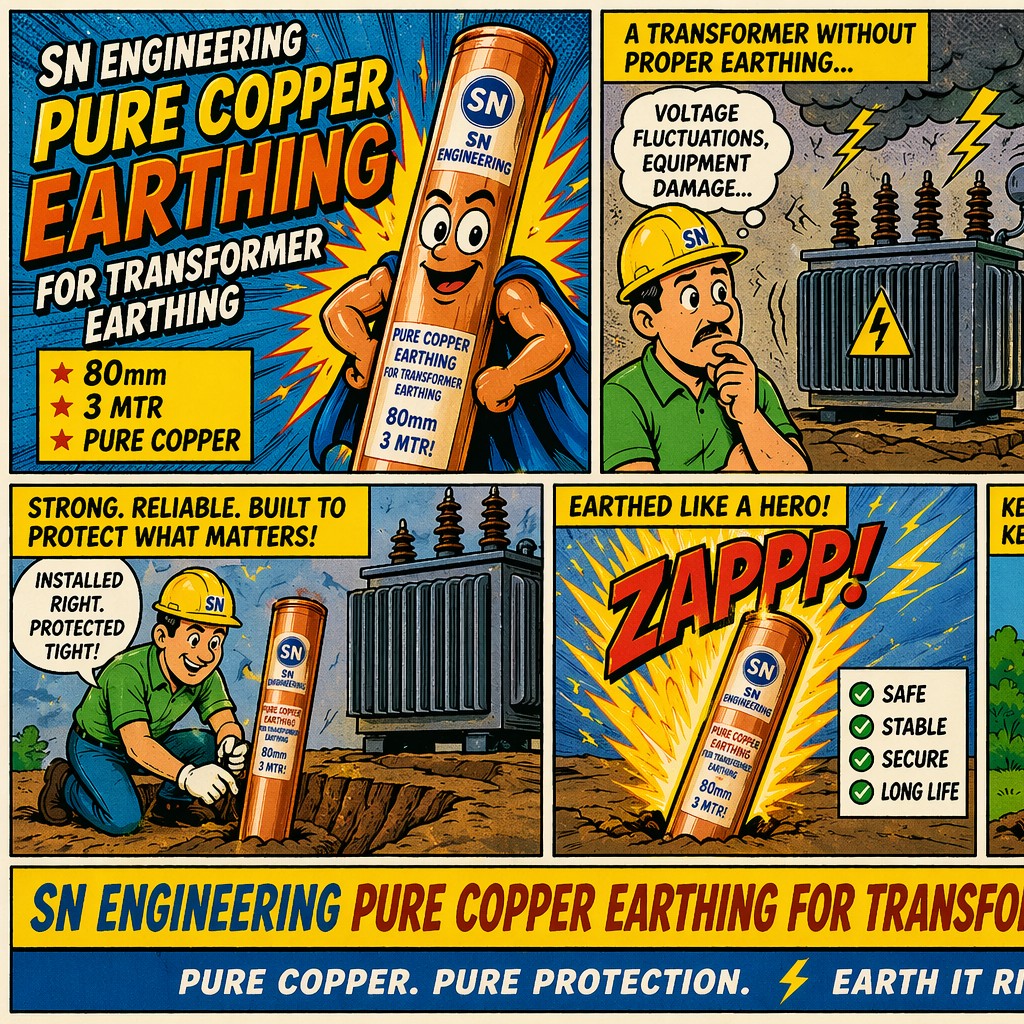
Pure copper electrode
2. Backfill Compound / Earthing Compound
A conductive chemical compound is filled around the electrode.
Functions:
Retains moisture
Improves conductivity
Reduces soil resistance
Prevents corrosion
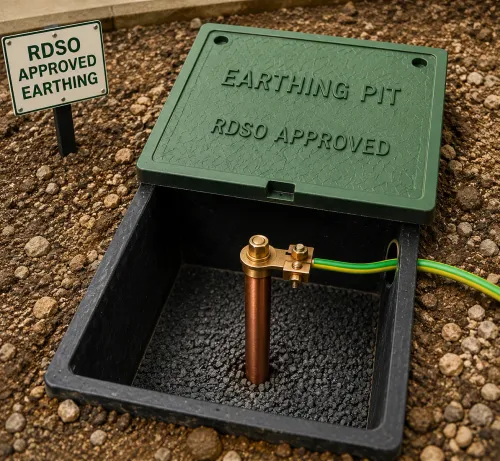
3. Earth Pit Chamber
Provides inspection and maintenance access.
How Chemical Earthing Works
When a fault current, lightning strike, or surge voltage occurs, the current travels through the electrical system toward the earthing network.
The chemical earthing system provides a low-resistance path for the current to safely flow into the ground.
The conductive compound surrounding the electrode spreads the current over a larger area and maintains stable grounding performance.
Working Process
Step 1 – Fault Current Generated
A lightning strike, short circuit, or surge occurs.
Step 2 – Current Flows to Earthing
The current travels through the grounding conductor to the earthing electrode.
Step 3 – Conductive Compound Dissipates Current
The chemical compound helps quickly disperse current into surrounding soil.
Step 4 – Equipment & Human Safety
The dangerous voltage safely enters the earth, protecting:
Humans
Electrical equipment
Transformers
PLC systems
UPS systems
Computers
Industrial machinery
Advantages of Chemical Earthing
Low Earth Resistance
Provides stable and low resistance grounding.
Works in Dry Soil
Effective in sandy, rocky, and low-moisture soil.
Long Life
Chemical earthing systems can last many years with minimal maintenance.
Corrosion Resistance
Copper bonded and chemical compounds reduce corrosion.
Better Lightning Protection
Quickly dissipates high lightning current safely.
Maintenance Free
Requires less watering and maintenance than conventional earthing.
Applications of Chemical Earthing
Chemical earthing is widely used in:
Industries
Data centers
Solar plants
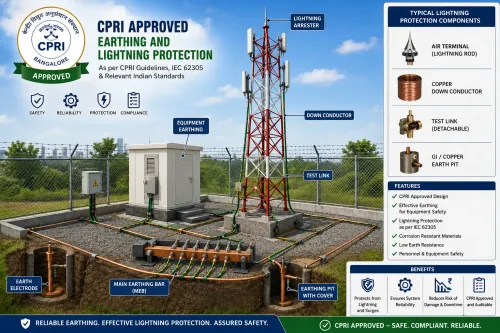
Telecom towers
Hospitals
Airports
Railway projects
Metro infrastructure
Power plants
Commercial buildings
Residential towers
Difference Between Normal Earthing & Chemical Earthing
Feature
Normal Earthing
Chemical Earthing
Resistance Stability
Changes frequently
Stable
Performance in Dry Soil
Poor
Excellent
Maintenance
High
Low
Corrosion Protection
Limited
Better
Life Span
Moderate
Long
Lightning Handling
Average
Excellent
Types of Chemical Earthing
Copper Bonded Chemical Earthing
Best conductivity and corrosion resistance.
GI Chemical Earthing
Economical solution for general applications.
Maintenance Free Earthing
Advanced earthing with long operational life.
Importance of Chemical Earthing in Lightning Protection
Lightning strikes generate extremely high current. Without proper grounding:
Equipment can burn
Fire accidents can occur
Panels may fail
Transformers may get damaged
Chemical earthing safely disperses lightning current into the ground and improves the efficiency of lightning arresters.
Industries Using Chemical Earthing
Industrial Plants
Protects machinery and automation systems.
Telecom Towers
Ensures safe grounding for communication equipment.
Solar Power Plants
Protects inverters and solar infrastructure.
Data Centers
Prevents server damage and downtime.
Hospitals
Protects sensitive medical equipment.
Signs of Poor Earthing
Frequent equipment failure
Electric shocks
High neutral voltage
Lightning damage
PLC/VFD failure
UPS malfunction
Electrical noise
Ideal Earth Resistance Values
General recommended values:
Residential: Below 5 Ohm
Commercial: Below 2 Ohm
Data centers & telecom: Below 1 Ohm
Substations: Very low resistance required
Why Copper Bonded Earthing is Popular
Copper bonded electrodes are widely preferred because they offer:
High conductivity
Corrosion resistance
Long life
Strong mechanical strength
Better performance in harsh soil
Why Choose Professional Chemical Earthing
Professional installation ensures:
Correct electrode depth
Proper compound filling
Stable resistance
Safe current dissipation
Compliance with standards
International Standards for Earthing
Chemical earthing systems are designed according to:
IEC Standards
IEEE Standards
IS Standards
NFC Standards
SEO Keywords