
least 20 inches. Non-ferrous materials, like copper, only require a thickness of 0.60 inches.
FAQs: Earthing Electrodes
Q. What is an earthing electrode?
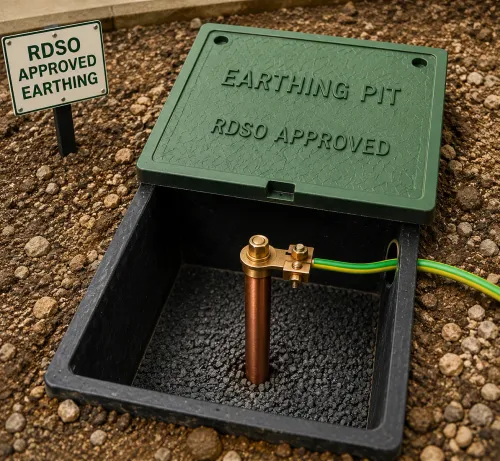
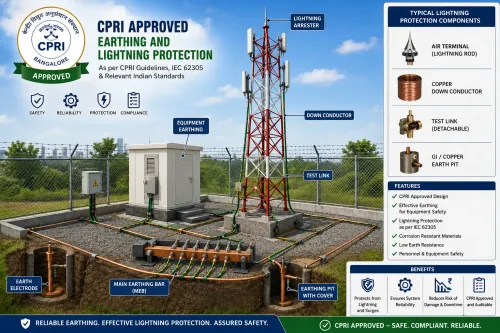
Ans. An earth electrode is a conductor that is buried at ground level to direct fault currents downward. Operating losses are incurred due to the earth top electrode of a transmission system project since it is used primarily as a return path for DC current. To prevent electrochemical corrosion of metallic objects buried nearby, the earth electrode is usually located several tens of kilometers away from the converter stations where the DC current is generated.
Q. What are the types of earthing electrodes?
Ans. There are four types of electric earthing systems:
Pipe Earthing
Mat Earthing
Plate Earthing
Marconite Earthing
Q. Why are earth electrodes used?
Ans. When a cable, appliance, or wire is damaged, the electrical current can be safely sent to the earth via the earth electrode. In order to complete the electrical circuit, an electrode called an earth rod must be inserted into the ground close to your home's switchboard.
Q. What material is used for the earthing electrode?
Ans. Copper is the best option for both earth electrodes and subterranean conductors; solid copper is suggested for intense fault current installations, while copper-bonded rods are typically used for smaller portions.