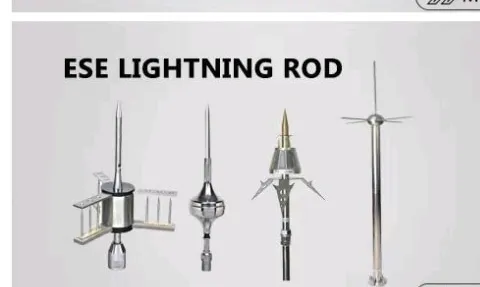
Conventional vs ese lightning arrester
Designing a lightning arrester involves several steps:
1. Determine the voltage rating: Based on the maximum voltage of the system to be protected.
2. Select the type: Choose from spark gap, valve-type, or surge arrester designs, considering factors like response time and energy handling capabilities.
3. Calculate the discharge current: Based on the expected lightning surge current and the arrester's energy absorption capacity.
4. Select the gap distance: For spark gap arresters, the gap distance determines the voltage at which the arrester sparks over.
5. Choose the electrodes: Select materials with high conductivity and durability, like copper or aluminum.
6. Determine the grounding resistance: Ensure a low grounding resistance to effectively dissipate the surge current.
7. Consider environmental factors: Account for temperature, humidity, and pollution levels, which can affect the arrester's performance.
8. Perform simulations and testing: Validate the design using simulations and testing to ensure it meets the required standards (e.g., IEC 60099-4).
9. Install and maintain: Properly install the arrester and perform regular maintenance to ensure its effectiveness.
Note: Designing a lightning arrester requires expertise in electrical engineering and lightning protection. It's recommended to consult with a professional or refer to relevant standards and guidelines.
Www.chemicalearthingelectrode.com
Keywords